Showing posts with label canada. Show all posts

July 30, 2009

News

Quebec Immigration Update: Changes to selection grid to improve immigration and settlement process

Print E-mail
Wednesday, 29 July 2009
Since 1991, the province of Quebec has had an agreement in place with the Government of Canada, called the Canada-Quebec Accord, which allows Quebec to select its own immigrants. In the June 2009 edition of our newsletter, we reported that the Quebec Immigration Minister had announced changes to Quebec’s immigration programs. Some of these changes have already been put into effect, while others will be implemented in October. More information has since been released about how the new amendments will facilitate immigration to Quebec.

Quebec’s population is aging at a faster rate than that of the rest of Canada, as well as that of most developed countries. This is combined with the fact that current birth rates in Quebec are not enough to allow the population to grow, or to replace the loss in the workforce resulting from this demographic shift.

The Minister expects that the proposed amendments will help combat these challenges by welcoming a greater number of qualified immigrants to Quebec.

The changes are being implemented in three stages.

    First of all, some minor changes to Quebec Immigration were made earlier this month, aimed at facilitating the process for families, students, and people currently facing distressful situations in their home countries.

  • Individuals who have been issued a Certificat de Sélection du Québec (Quebec Selection Certificate, commonly known as a CSQ) can now add a new spouse or child to their application without having to pay additional Quebec government processing fees.

  • Study permits are now valid for 49 months, as opposed to 37 months, in order to accommodate students in programs that require four years to complete.

  • To facilitate the application process for people applying under the category of persons in a particularly distressful situation, Quebec immigration authorities are now waiving interviews for these applicants whenever possible.

The second stage is the new Programme de l’expérience québécoise (Quebec Experience Class), an essential component of the new immigration regulations, which will be rolled out sometime before October. This program will allow foreign students and workers in the province to immigrate to Quebec under a simplified, accelerated process.

People who have studied in Quebec have already been integrated into Quebec society and have educational qualifications that employers in the province will recognize, Quebec’s Immigration Minister said in her announcement of the changes.

Finally, the last stage of the changes will be implemented on October 14, 2009. Modifications to the requirements and processing of Quebec Skilled Worker applications will be made, to ensure that applicants who fulfill the immediate needs of Quebec’s labour market are selected on a priority basis.

The system will favour young workers and families, as well as those who have worked, studied or stayed in Quebec.

The proposed changes are being implemented to attract more immigrants who have the potential to successfully settle in Quebec and participate in its workforce.

Quebec’s Skilled Worker program operates under a “selection grid” of criteria used to determine whether an applicant would be able to successfully settle and work in the province. Points are assigned to applicants and their spouses, if applicable, according to their level and field of education, work experience, age, previous experience in Quebec and language ability.

In order to be eligible to apply for immigration as a Quebec Skilled Worker, a pass mark of 50 points for single applicants and 57 points for applicants with accompanying spouses must be met.

The updated breakdown of the Quebec Skilled Worker selection criteria has not yet been released, but general changes have been announced.

  • Applications where the principal applicant or their spouse has the necessary training for occupations that are highly in demand in Quebec will be processed on a priority basis. The Quebec Immigration Minister recently issued a “List of Preferred Areas of Training” which lists the fields of training that fall under this priority-processing category.

  • Education, age and previous stays in Quebec will be considered differently under the new system. Points allocated for the level of education of the applicant and his or her spouse will take two-year university programs into account. While applicants are currently awarded extra points for having obtained their degree, diploma or certificate in Quebec, no matter what their field of education, the extra weight given to education in Quebec will now be built into the List of Preferred Areas of Training.

  • The number of points allocated for age will now decline less dramatically after the age of 35.

  • Previous work or study in Quebec will earn the applicant additional points, if the applicant does not qualify for the Quebec Experience Class.

The selection grid was last revised in October 2006. Quebec regularly reviews its immigration programs and policies to ensure that individuals who can make a successful transition to Quebec society and its workforce are able to immigrate to the province. The adjustments to the grid that will be made this year are in response to Quebec’s current labour market and demographic needs.

November 24, 2007

Canadians things to do...

He estado investigando... y me encontre con esta lista...
(de las cuales ya hize 7 y casi otras dos)

  1. Tome un tour del Parlamento y pase un 1 de julio en la colina del Parlamento.
  2. Vaya al Festival de la Risa en Montréal
  3. Esquiar en Whistler, Lake Louise y Tremblant
  4. Pegue la lengua a una superficie metálica en pleno invierno (no es valido en British Columbia - opcional si no naciste en Canadá)
  5. Asista a un juego de Hockey sobre Hielo por el Campeonato y la Copa Stanley cuando uno de los equipos contendientes sea Canadiense (puede sustituirse por un juego por la medalla de oro en las Olimpiadas de invierno o los campeonatos mundiales, siempre y cuando uno de los equipos en la final sea Canadiense)
  6. Vaya a la Estampida (rodeo) de Calgary
  7. Pase un Día en St. Jean Baptiste en Quebec City (El Dia de San Juan - 24 de junio - es la Fiesta Nacional de Québec)
  8. Visite Osos Polares en Churchill Manitoba
  9. Camine en el fondo del mar en la Bahía de Fundy durante la marea baja y hacer kayaking en el mismo sitio en la tarde con la marea alta.
  10. Meta el pie en el océano, pero en el Océano Artico en Tuktuyaktuk.
  11. Compre una escultura Inuit en Cape Dorset.
  12. Observe la Aurora Borealis pero en el Yukon.
  13. Tomese una foto en el punto clave en el Parque Nacional de Gross Morne en Newfoundland y Labrador.
  14. Visite la casa de Ana de Green Gables en Prince Edward Island (puede sustituirse por un juego de Golf en la isla).
  15. Conduzca alrededor de la Isla de Cape Breton en Nueva Escocia y acampar en el Parque Nacional Cape Breton Highlands.
  16. Subir a la Torre CN en Toronto, pero a pie.
  17. Pasee por los campos de trigo en Saskatchewan.
  18. Haga un paseo en canoa y acampe.
  19. Patine en hielo en el Canal Rideau de Ottawa.
  20. Hacer voluntarianismo por la comunidad.
  21. Quéjese de los Americanos pero pase un invierno en Florida.
  22. Coma un sandwich de carne ahumada (tipo pastrami) en Schwartz de Montreal. Vegetarianos, solo las papas.
  23. Ir al Yukon a ver la carrera de trineos jalados por perros The Yukon Quest.
  24. Observe las montañas rocallosas, pero desde lo alto del teleférico de Banff.
  25. Coma papas a la francesa, pero con poutine y en Québec.
  26. Probar una cola de castor, ambas la tarta/pastel (es como un hot cake) y la de verdad al horno(ok, la segunda no es obligatoria a menos que viva en el Yukon).
  27. Coma unos hot-cakes (pancakes) con miel 100% pura de maple (jarabe de arce), pero en una granja donde se hace la miel.
  28. Mojese con el rocio de las Cascadas de Niagara.
  29. Dese el baño de oso polar el 1ero de enero. (el baño de oso polar es un evento que tiene lugar en muchas comunidades canadienses a orillas de un lago el cual no se ha congelado completamente. El 1ero de enero muchos canadienses se meten al agua aunque sea por unos segundos normalmente para recabar fondos a beneficio de muchas causas. Locos? no, Canadienses).

October 14, 2007

hoy es cumple de....

Natalie !!!!


Natalie Natalie de la Colombie!!!
(Aqui en nuestro lujoso y espacioso departamento) en donde ustedes estan viendo la cocina, el closet, el refri, recibidor, bano y en realidad la mitad del depa......


Espero verte pronto!!!


Es mi amiga colombiana, que conoci y vivi con ella un tiempo por aquellas tierras canadienses

September 30, 2007

Para Renata


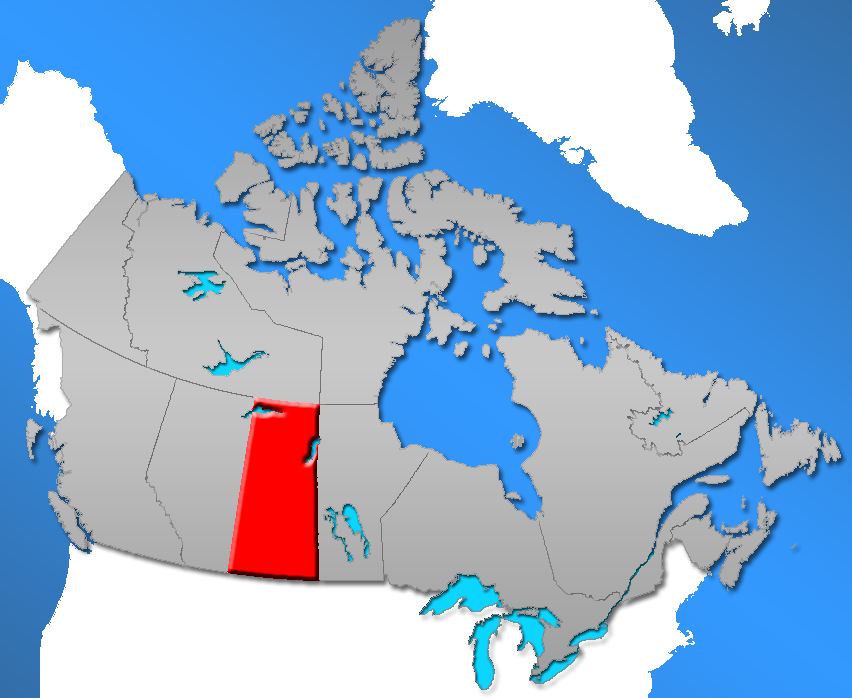
Saskatchewan, provincia del oeste de Canadá. Su capital es Regina, aunque su ciudad más poblada es Saskatoon. La industria de Saskatchewan, provincia escasamente poblada, se concentra en la agricultura, sobre todo del trigo.
El nombre de la provincia proviene del río Saskatchewan, cuyo nombre deriva del Cree: kisiskāciwani-sīpiy, que significa "río de curso veloz"
Curiosidades
  • Saskatchewan envía más jugadores per cápita a la NHL que cualquier otra provincia o estado.
  • El carné de conducir de Saskatchewan lleva el eslogan "Tierra de los cielos vivientes" (Land of the Living Skies), y tiene dibujado a tres tallos de trigo.
  • La novela de John le Carre, The Constant Gardener, menciona a Saskatchewan en muchos de sus episodios.
  • Con aproximadamente 250 campos de golf, Saskatchewan posee más campos per cápita que cualquier otro lugar en el mundo.